Google

Monday, November 18, 2013

Neither/Nor - Charles Atlas

Album: To The Dust: From Man You Came And To Man You Shall Return

The opener of the album, Neither/Nor, prepares the listener for a voyage into post-rock’s most ambient and cinematic side. The track opens with a mesmerizing guitar line that is repeated through most of the song. Then the piano enters with a mournful melody, followed by the melodica, they start a slow and quiet build up when suddenly a guitar solo takes the stage. All of this sets the stage for an outstanding listening experience, as then the cello and the synthesizer are introduced with a very gentle mumbling in the background appearing sporadically.

The instruments work together to create a cohesive composition. While some of them are the main feature during some passages of the song, they leave the forefront for others when the song needs it, creating a beautiful sensation of harmony throughout it. At the end the instrumentation starts to fade away, leaving the listener with a cathartic sensation as the guitar and cello take their last breathe before the song ends

Post-rock is mostly a genre that focuses on what images music produces in the listener, Charles Atlas create a very cinematic atmosphere throughout this song. Personally it feels as if I was in a desert of snow, a sea of white which no traces of human life ever touched it. There is a feeling of loneliness and wondering in the song, as if the listener was about to be part of a long and lonesome exodus towards the absolute nothing. At the same time it is a rewarding one, as there is a certain warmth in the song, a feeling of fulfillment and self-realization that is achieved during the hard, long and lonely trip on which the song takes you.


Tuesday, November 12, 2013

Narrow - Soap&Skin

Tracklist:

1. Vater
2. Voyage Voyage
3. Deathmental
4. Cradlesong
5. Wonder           
6. Lost
7. Boat Turns Towards the Port
8. Big Hand Nails Down

Artist:

Anja Plaschg


Soap&Skin is the name of Austrian singer-songwriter Anja Plaschg’s musical project. The music she makes is based in two main kinds of compositions: piano driven ballads full of intensity and emotion, and industrial influenced experiments with dark and menacing atmospheres around them. Her second album called Narrow (2012) shows a progression in both senses from her debut album, Lovetune for Vacuum (2009) taking the intensity up to a new level.

Her voice is in top form in this album, driving all songs. She can sing with a lot of passion in some sections, as well as having a weary tone in some others.  This makes the listener go through many diverse landscapes of emotion. From feeling like looking from afar at a forest in the middle of winter, to a sense of being trapped in a summer storm in the middle of the sea, all in the same song. The piano playing also helps deliver this wide range of sentimental sceneries, with its extremely nuanced undertones. The melodies can transform from very vulnerable to extremely bold sounding, with masterful ease.  

Narrow was influenced by the death of Anja’s father after the recording of her debut, and it clearly shows so since the first song. Vater (Father) is the opener, and the first song she sings in her mother tongue. Probably the most complete song on the album, showing great maturity and growth from Anja, it is also the most powerful song on it. It displays a wide arrange of emotions and it builds up to a wonderful climax, where the song displays some electronic beats, drums, violins and horns, accompanying the wistful piano melody.

Even if that level of intensity is not reached again in the rest of the album, the songs that remain all show magnificent songwriting and very emotional moments. Voyage Voyage, a cover of 80’s French singer Desireless, has a melancholic feel throughout, and a beautiful string section. Combined, they create a longing feeling, as if it was sung by a loved one who is going away on a long trip and may never come back.

Wonder is a personal favorite, and is also probably one of the saddest moments of the album. It has only two verses which are repeated throughout the song, but nevertheless there is progression, from the first simple piano melody to the inclusion of the string section and the choir. The verses sung by the choir have a lullaby feel to them.  They paint a picture of a mother singing to her child while caressing him, with a dim light giving a warm feeling to the scene. Without a doubt, it is one of the most beautiful moments of the album.

Though the album’s main features are these piano ballads that display a mournful and somber tone, there are some pieces in this LP that showcases the more electronic sound of Soap&Skin’s musical spectrum. The more industrial sounds of the album show a varied mixture of beats and moods that give the album a very strong personality. From the deeply abrasive and massive beats of Deathmental, to the minimalist electronic subtleties of the agonic Boat Turns towards the Port, the diversity of this project in these compositions is outstanding.

The vocals in songs like Deathmental with its threatening melody, or Big Hand Nails Down with its tribal drumming fit the compositions perfectly.  The different beats and the general atmosphere of the electronic tracks shape the vocals to fit them.  Anja meets the vocal requirements of the songs perfectly, delivering what each of them needs to create cohesive compositions that reach their emotional goals magnificently.
The lyrics in these songs are very mournful and dramatic, showing a sense of bereavement and of painful acceptance of the inexorable. Like the verse sung with such sorrow by Anja in Wonder:

“Why we can't be
or see who cuts us asunder
like a boor felling a tree
you're the thunder
going under
over me”

Or the lyrics of Lost, presenting an extremely bleak picture of longing and loss

“Sitting, staring,
watching all you leave
behind this
There is nothing
which has so much more to give
I lost
I lost you”

The album as a whole suffers from a lack of cohesiveness, a typical problem of singer-songwriter’s albums. The songs don’t seem to have any special flow, so any song could be placed at any moment of the album and there wouldn’t be much difference. Deathmental is thrown between two piano ballads, which help it stand out, but it also feels out of place in that moment of the record. In the end, as the songs are so randomly put together, it could be listened in any order without changing much.

This is a minor concern though. Overall this is a very strong release, and shows real progression towards more adventurous and experimental territory for this project. Already a big music star in her own country, hopes are very high for how this amazing songwriter’s career will turn out in the future. If she keeps delivering songs as strong as the ones presented here, I can say with confidence that we are in the presence of one of the most interesting songwriters of our time.

Monday, November 11, 2013

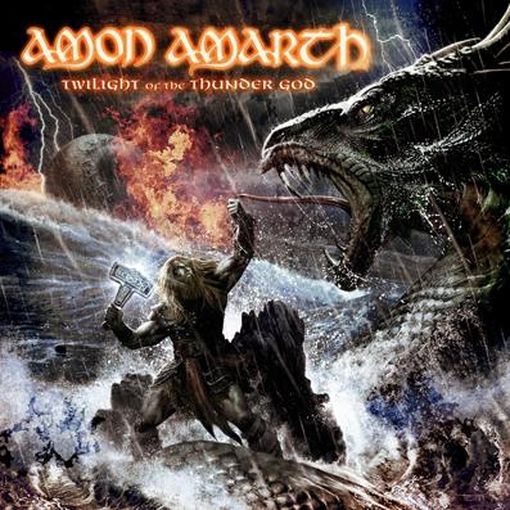
Embrace of the Endless Ocean - Amon Amarth

Album: Twilight of the Thunder God

Embrace of the Endless Ocean  is the closer of one of Amon Amarth’s most popular albums, and it finishes it in epic style, with the tale of a slave going back home. The vocals adjust the subject matter, with vocalist Johan Hegg giving a passionate performance. His deep guttural vocals are outstanding during the whole track, especially in the climax of the song. The drums in the opening of the song have an introductory nature to them, as if they were drowning the listener into the world that the story depicts. They are very solid all through the song, especially during the “storm” section

The guitars are the highlight instrument of the song. The riffs present throughout the song are aggressive and match perfectly with the story. The song opens with the guitars playing the main musical theme of the song, which is repeated each time the character reflects upon his home and the things he misses from it. It is a very mournful melody, full of sentiment and a feeling of longing. As the song progresses the guitars become faster as they keep up with what’s going on lyrically in the song, a storm striking the speakers boat. As the last words are sung by the vocalist, a wistful solo ends the song in a tone of despair and grief as the hero of the story dies and is buried beneath the sea. The whole song sounds as if it were a dirge for the main character, as the music tells the story as much as the lyrics do, giving it a feeling of cohesiveness.

Wednesday, November 6, 2013

Mrs. Robinson - Simon & Garfunkel

Album: Bookends

The lyrics show the current situation of public figures in America in the 60’s, and how they were perceived by the public. They portray the way in which the media treats celebrities when they are big: their personal life gets invaded, resulting in them having to hide for society not to judge them. The last verse illustrates the image of a citizen watching a presidential debate as if it was a talk show, with candidates as celebrities, being there for their entertainment.

The song was written before it was chosen as part of the soundtrack to The Graduate, and it was supposed to be called Ms. Roosevelt. The references to this character and to Joe DiMaggio in the chorus section show a yearning for celebrities and political figures of the past, and how they acted towards the fame they had. These public figures, who from the start, kept their private lives, quietly making big contributions in their respective fields. The loss of people like this in the context of one of the most important and tumultuous decades in American history is what is at the core of this track.

The vocal harmonies are the highlights throughout the song, with the two vocalists perfectly synchronized to create the atmosphere they need in each section. While in the chorus they display a celebratory melody, in the verses, the tone gets darker and more private, as if they were trying to tell a secret to the listener.

The instruments follow the vocal melodies: they play a very catchy tune in the chorus that goes along with the chanting of the two lead singers. Then, when the chorus stops, the percussion and the bass become more prominent, the guitars have a very intimate feel to them. These sections sound as if the players were improvising the melody, and they flow spontaneously, especially in the outro of the song. It is a very well-crafted song, a classic folk rock track very representative of the sounds popular in the 60’s.

Sunday, November 3, 2013

Hallowed be Thy Name - Iron Maiden

Album: Number of the Beast


Hallowed be Thy Name is one of Iron Maiden’s most anthemic tracks. It shows great chemistry between the players in the instrumental sections. The vocals are the focal point in the verses, with Dickinson delivering one of his more aggressive vocal performances. We got a constant relentless bass line in pure Iron Maiden fashion throughout the whole song, as well as a hypnotic guitar melody that keeps the listeners attention on edge.

The instrumental sections are the highlights of the song, especially in the second half. Here they show great interplay between the bass and the guitar, a strong guitar solo, and some fills in the end, leaded by the drums but nicely complemented by the guitar and the bass. In the end we have a classic Iron Maiden ending, as a powerful drum outro and a mesmerizing guitar harmony close the track in epic fashion.

Friday, November 1, 2013

Albums and EPs reviews


In this part of the blog you’ll find the reviews of full-length albums and EPs. You can post your opinion on the albums on the comments and also make suggestions on what albums you want to see reviewed next. 

Your song's review

In this part of the blog you can ask for an analysis of your favorite songs or/and an opinion on the highlight features of a particular track. Write the song you’d like to see analyzed in the comments to this thread and keep an eye up for future articles.